
Adafruit
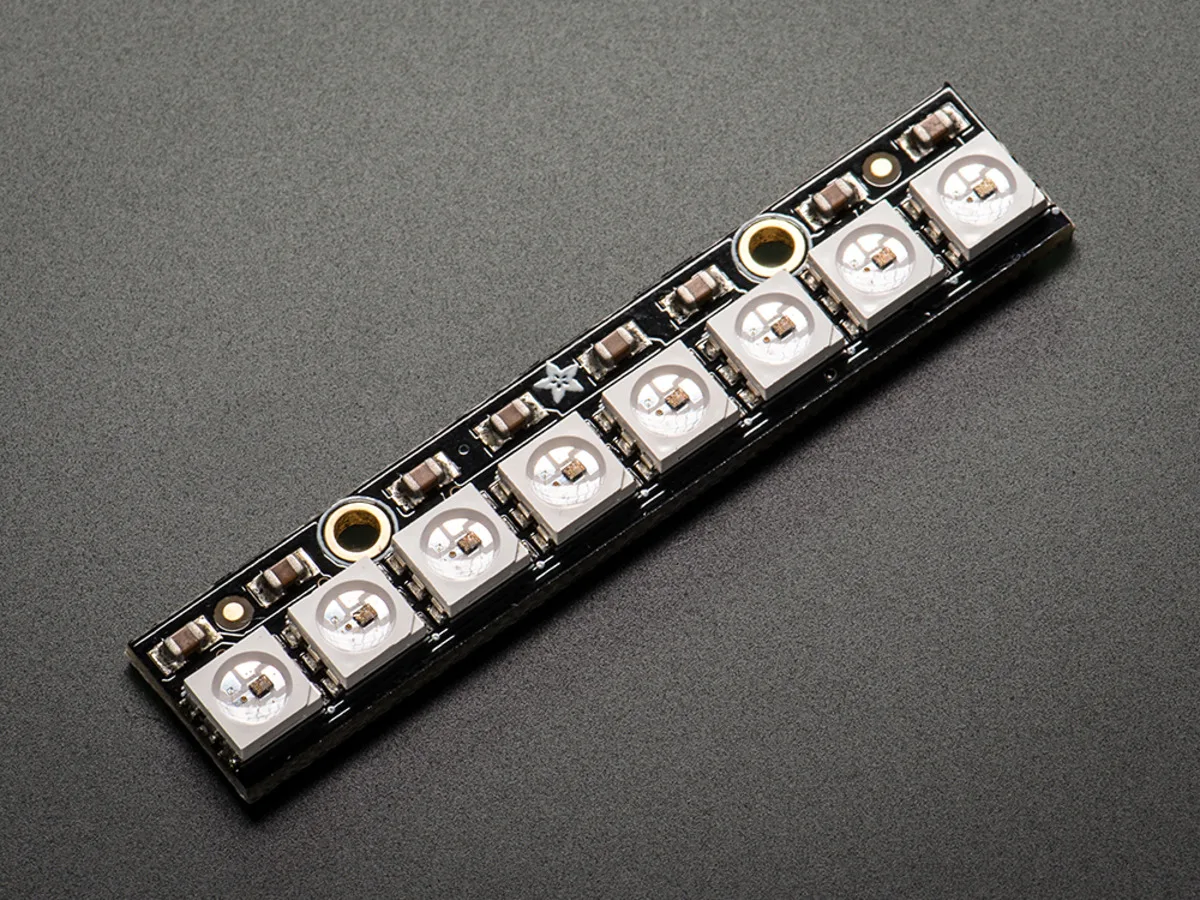
Adafruit NeoPixel Stick 8 5050 RGB LEDs
- Engineering Develop…
8,99 щ.д.
0.00011509BTC
В наличностПриемаме криптовалута — така монетите, които притежавате, могат да купят истински хардуер.Платете с крипто, похарчете го за истински хардуер. Безплатна застрахована доставка по целия свят над 399 $. Неутрални кашони без марка, изпратени от Германия.Безплатна застрахована доставка над 399 $. Курсът Ви е заключен за 30 минути веднага след отварянето на касата.Курс, заключен за 30 минути. Всеки артикул е запечатан, серийният му номер е проверен, и е покрит с 24-месечна гаранция.Запечатан, 24-месечна гаранция.


SparkFun Electronics
An easy-to-assemble shield that adds four Qwiic ports and a large prototyping area to Arduino boards, converting 5V to 3.3V for I2C devices
This shield adds four Qwiic ports to an Arduino board, converting the 5 V supply to 3.3 V for compatible I2C devices. A large prototyping area and 3-by-1 rails give space for custom circuitry alongside the daisy-chain connectors. Four mounting holes allow a small sensor board to be secured on top of the shield. The kit arrives unassembled for straightforward soldering.
Replacing loose jumper wires with keyed Qwiic cables removes mis-connection risk and speeds up sensor swaps. The jump is worth it when a project grows beyond one or two I2C modules and a tidy, expandable bus becomes necessary. On-board voltage translation protects 3.3 V peripherals from the Arduino’s 5 V logic without extra level-shifter boards.
Suits developers who want a clean, solderable base for stacking several Qwiic sensors on a single I2C bus. Builders needing a ready-made, zero-soldering HAT or a shield with isolated buses for address conflicts should look at other form factors. Projects requiring more than four simultaneous Qwiic drops will need an additional hub or multiplexer.
| Type | Engineering Development Tools |
|---|
The shield uses the standard Arduino Uno footprint so it fits Uno and compatible boards that share the same pin spacing.
Plug the sensor's JST cable into any of the four Qwiic ports; all ports share the same I2C bus so address conflicts are the only thing to watch.
On-board circuitry converts the Arduino's 5 V supply to the 3.3 V required by Qwiic devices.
Още от този рафт
Същият рафт, същата каса — осем монети и заключване на курса за 30 минути.
Това, което изпращате, и това, в което четете цените.
Изпратено от Вашия портфейл при поръчката
Само за визуализация — каталогът е в долари
Никоя валута не съответства.
Изберете езика, на който сайтът да Ви говори.
Няма съвпадащ език.
Нови сте тук?
Вече имате профил?
Няма автоматично нулиране: този магазин не изпраща имейли, така че няма еднократна връзка, която да поискате. Оставете адреса в профила си и той ще бъде обработен ръчно.
Заявката е приета
Нищо няма да пристигне във Вашата пощенска кутия — този магазин изобщо не изпраща имейли. Заявките се обработват ръчно.
Спомнихте си я?


