Micron Technology, Inc.
Micron Technology, Inc. MT4JTF12864AZ-1G4D1 1GB DDR3 1333 Desktop RAM
- 1GB
- DDR3 1333 (PC3 1060…
$28.99
0.00037469BTC
En stockNous acceptons la cryptomonnaie — les cryptos que vous détenez peuvent ainsi acheter du matériel réel.Payez en crypto, dépensez-la en matériel réel. Livraison assurée offerte partout dans le monde au-delà de 399 $. Cartons neutres, sans marque, expédiés depuis l’Allemagne.Livraison assurée offerte au-delà de 399 $. Votre taux est bloqué pendant 30 minutes dès l’ouverture de la caisse.Taux bloqué 30 minutes. Chaque article est scellé, son numéro de série est vérifié, et il est couvert par une garantie de 24 mois.Scellé, garanti 24 mois.


Intel
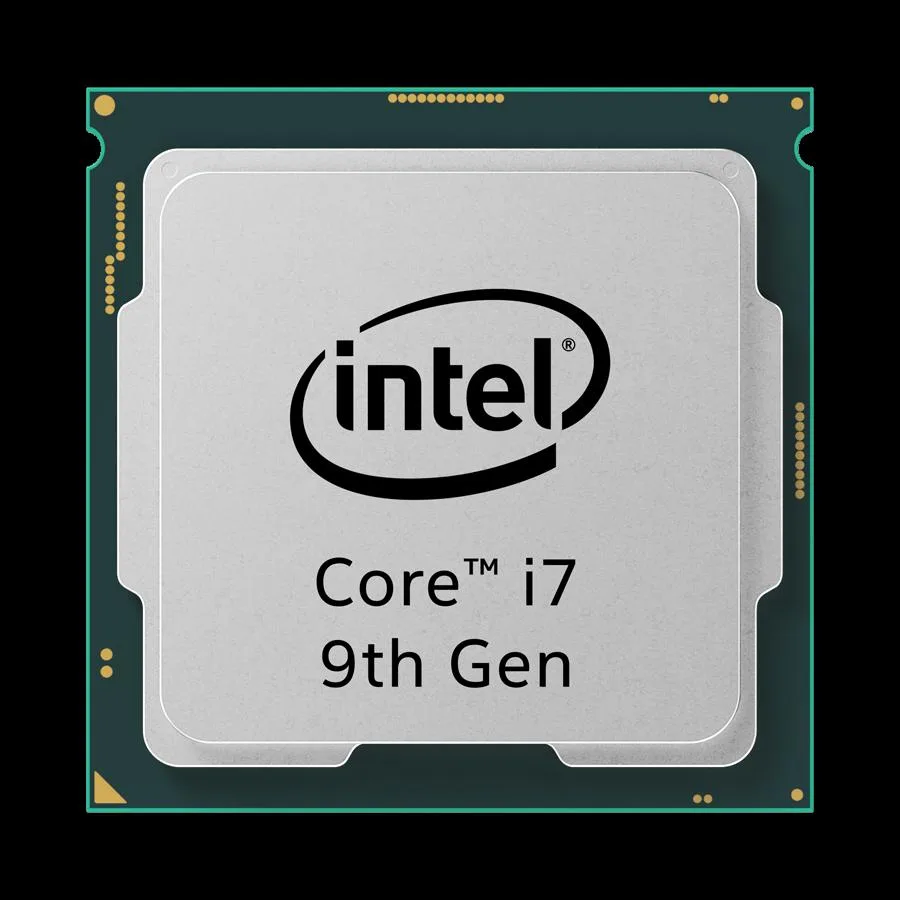
Eight-core desktop CPU reaching 4.9 GHz turbo with 12 MB L3 cache and integrated Intel UHD Graphics 630
The Intel Core i7-9700K is an 8-core, 8-thread desktop CPU built on 14nm Coffee Lake architecture. Base frequency sits at 3.6 GHz with a maximum turbo of 4.9 GHz. It targets users who want strong single-thread speed and multi-core throughput for gaming, content creation and general productivity without stepping up to a higher core-count tier.
The processor fits only motherboards with an LGA 1151 socket wired for the 300-series chipset. Memory support is dual-channel DDR4. The integrated Intel UHD Graphics 630 runs at a base of 350 MHz and can reach 1.2 GHz dynamically, providing display output when a discrete graphics card is not installed. A thermal solution is not included in the box.
Builders moving from a 4-core or non-K 8th Generation processor gain two additional cores, higher turbo headroom and an unlocked multiplier for overclocking. The jump makes sense when workloads scale beyond four threads or when higher sustained clocks reduce frame-time variance in CPU-bound titles. It does not suit buyers who need more than eight threads or who require a platform with newer I/O standards.
| Brand | Intel |
|---|---|
| Processors Type | Desktop |
| Series | Core i7 9th Gen |
| Name | Core i7-9700K |
| Model | BX80684I79700K |
| CPU Socket Type | LGA 1151 (300 Series) |
| Core Name | Coffee Lake |
| # of Cores | 8-Core |
| # of Threads | 8-Threads |
| Operating Frequency | 3.6 GHz |
| Max Turbo Frequency | 4.9 GHz |
| Bus Speed | 8 GT/s |
| L3 Cache | 12MB |
| Manufacturing Tech | 14nm |
| Memory Types | DDR4 |
| Memory Channel | 2 |
| Virtualization Technology Support | Yes |
| Integrated Graphics | Intel HD Graphics 630 |
| Graphics Base Frequency | 350 MHz |
| Graphics Max Dynamic Frequency | 1.2 GHz |
| PCI Express Revision | 3.0 |
| Max Number of PCI Express Lanes | 16 |
| Thermal Design Power | 95W |
| Operating System Supported | Windows 11 |
The 9700K has 8 cores and 8 threads at 3.6 GHz base with 4.9 GHz max turbo, giving more parallel throughput than a 6-core chip for rendering or heavy multitasking.
The 4.9 GHz peak applies to one or two cores under light loads; sustained all-core speeds sit lower, so gaming and burst tasks benefit while long renders run nearer the 3.6 GHz base.
The processor supports dual-channel DDR4 and 8 GT/s bus speed; memory frequency and PCIe lane count are set by the 300-series chipset, not the CPU itself.
Également dans ce rayon
Même rayon, même caisse — huit monnaies et un taux bloqué 30 minutes.
Ce que vous envoyez, et ce dans quoi vous lisez les prix.
Envoyé depuis votre portefeuille à la caisse
Affichage seul — le catalogue est libellé en dollars
Aucune monnaie ne correspond.
Choisissez la langue dans laquelle le site vous parle.
Première visite ?
Vous avez déjà un compte ?
Il n’y a pas de réinitialisation automatique : cette boutique n’envoie aucun e-mail, il n’existe donc aucun lien à usage unique à demander. Laissez l’adresse sur le compte, elle sera traitée à la main.
Demande enregistrée
Rien n’arrivera dans votre boîte de réception — cette boutique n’envoie aucun e-mail. Quelqu’un s’en occupe à la main.
Vous l’avez retrouvé ?