Intel
Intel SSDPE2MX012T701 1.2TB 2.5" PCIe 3.0 x4 MLC enterprise SSD
- 2.5"
- 1.2TB
523,99 USD576,99 USD−9%
0.00652744BTC
DisponibileAccettiamo criptovalute — così le crypto che Lei possiede possono comprare hardware reale.Paghi in crypto, la spenda in hardware reale. Spedizione assicurata gratuita in tutto il mondo oltre i 399 $. Cartoni neutri, senza marchio, spediti dalla Germania.Spedizione assicurata gratuita oltre i 399 $. Il Suo tasso resta bloccato per 30 minuti dall’apertura del checkout.Tasso bloccato 30 minuti. Ogni articolo è sigillato, il numero di serie è verificato, ed è coperto da una garanzia di 24 mesi.Sigillato, garantito 24 mesi.


Intel
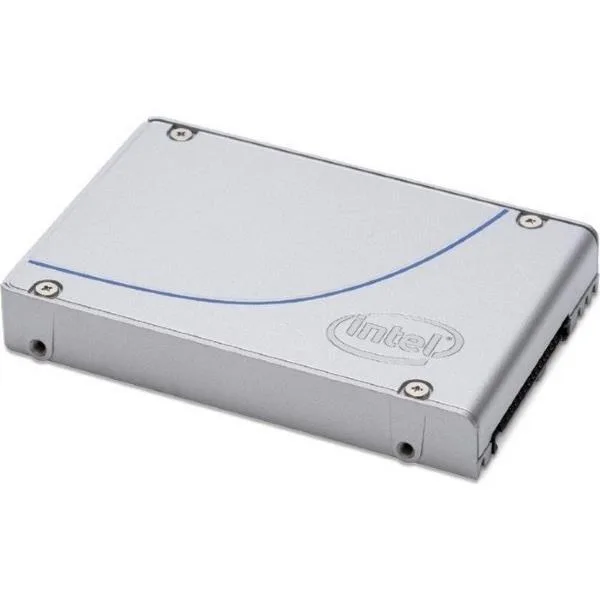
A 2.5" enterprise SSD with 450GB MLC storage, PCIe 3.0 x4 interface, 1200 MBps read and 600 MBps write speeds, plus 145,000 random read IOPS
Options 450GB 2.5"
The Intel DC P3520 is a 450GB enterprise solid-state drive built for servers and storage arrays that demand consistent low-latency performance. It uses MLC NAND and a PCI-Express 3.0 x4 interface in a 2.5 inch form factor. This drive targets administrators who need reliable mixed-workload endurance in a standard drive bay.
The PCI-Express 3.0 x4 link caps maximum sequential throughput at 1200 MBps read and 600 MBps write, so workloads that require higher bandwidth will saturate the bus. Random performance reaches 145,000 IOPS read and 19,000 IOPS write with 20 µs latency, which suits transactional databases and virtualisation. Systems limited to PCIe 2.0 or x2 electrical width will reduce these figures further.
The 450GB MLC capacity determines whether the drive can hold the working set for write-intensive applications such as logging, caching or online transaction processing. Larger datasets or long-term retention needs will exceed the available space, while read-heavy archives may find the cost per gigabyte less efficient than higher-capacity alternatives.
| Brand | Intel |
|---|---|
| Series | DC P3520 |
| Model | SSDPE2MX450G701 |
| Form Factor | 2.5" |
| Capacity | 450GB |
| Memory Components | MLC |
| Interface | PCI-Express 3.0 x4 |
| Max Sequential Read | Up to 1200 MBps |
| Max Sequential Write | Up to 600 MBps |
| 4KB Random Read | Up to 145,000 IOPS |
| 4KB Random Write | Up to 19,000 IOPS |
| Read Latency | 20 µs |
| Write Latency | 20 µs |
| MTBF | 2,000,000 hours |
| Power Consumption (Idle) | 4W |
| Power Consumption (Active) | Avg. 8W (Write), 9W (Read) |
| Operating Temperature | 0°C ~ +35°C |
| Max Shock Resistance | 1000G/0.5msec |
| Max Vibration Resistance | Operating: 2.17 GRMS Non-Operating: 3.13 GRMS |
| Height | 15.00mm |
| Weight | 4.41 oz. |
| Peso di spedizione | 0.54 kg |
| Dimensioni del pacco | 152 × 109 × 28 mm |
Altre versioni di questo modello
Stessa famiglia, con memoria, dissipatore o frequenza diversi — confronti prima di decidere.
The 450GB model provides up to 1200 MBps sequential read and 600 MBps sequential write. Larger capacities in the same series typically increase write IOPS and endurance, so choose based on whether your workload is read-heavy or write-intensive.
In a PCIe 3.0 x4 slot the drive can sustain up to 1200 MBps on large-block reads. Real-world throughput will depend on queue depth, CPU overhead and the application's I/O pattern, but the interface itself does not cap below that number.
The x4 lane width on PCIe 3.0 delivers a theoretical maximum of roughly 4 GBps. This drive's rated 1200 MBps read and 600 MBps write sit well within that ceiling, so the interface is not the bottleneck for this model.
Anche in questo reparto
Stesso reparto, stessa cassa — otto monete e un cambio bloccato per 30 minuti.
Cosa invia per pagare, e in quale valuta legge i prezzi.
Inviato dal Suo portafoglio alla cassa
Solo a titolo indicativo — il catalogo è espresso in dollari
Nessuna valuta corrisponde.
Scelga la lingua in cui il sito Le parla.
Prima visita?
Ne ha già uno?
Non esiste un ripristino automatico: questo negozio non invia e-mail, quindi non esiste alcun link monouso da richiedere. Lasci l’indirizzo sull’account: verrà gestito manualmente.
Richiesta registrata
Non arriverà nulla nella Sua casella di posta — questo negozio non invia e-mail. Qualcuno se ne occupa manualmente.
L’ha ritrovata?