Intel
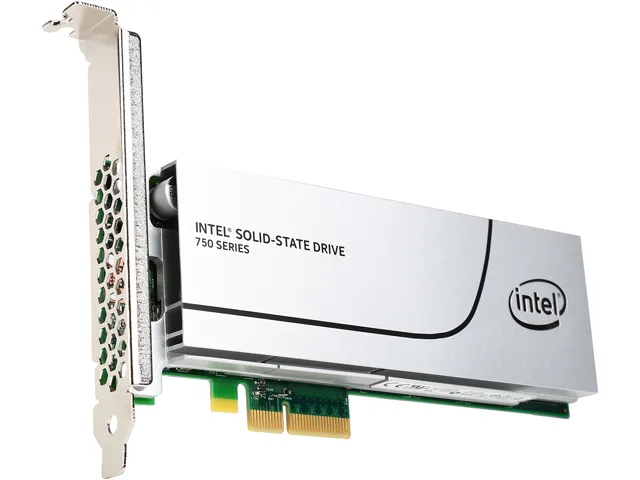
Intel 750 Series SSDPEDMW400G4X1 400GB AIC internal SSD
- Internal Solid Stat…
- Consumer
432,99 $US535,99 $US−19%
0.00559419BTC
En stockNous acceptons la cryptomonnaie — les cryptos que vous détenez peuvent ainsi acheter du matériel réel.Payez en crypto, dépensez-la en matériel réel. Livraison assurée offerte partout dans le monde au-delà de 399 $. Cartons neutres, sans marque, expédiés depuis l’Allemagne.Livraison assurée offerte au-delà de 399 $. Votre taux est bloqué pendant 30 minutes dès l’ouverture de la caisse.Taux bloqué 30 minutes. Chaque article est scellé, son numéro de série est vérifié, et il est couvert par une garantie de 24 mois.Scellé, garanti 24 mois.


Intel
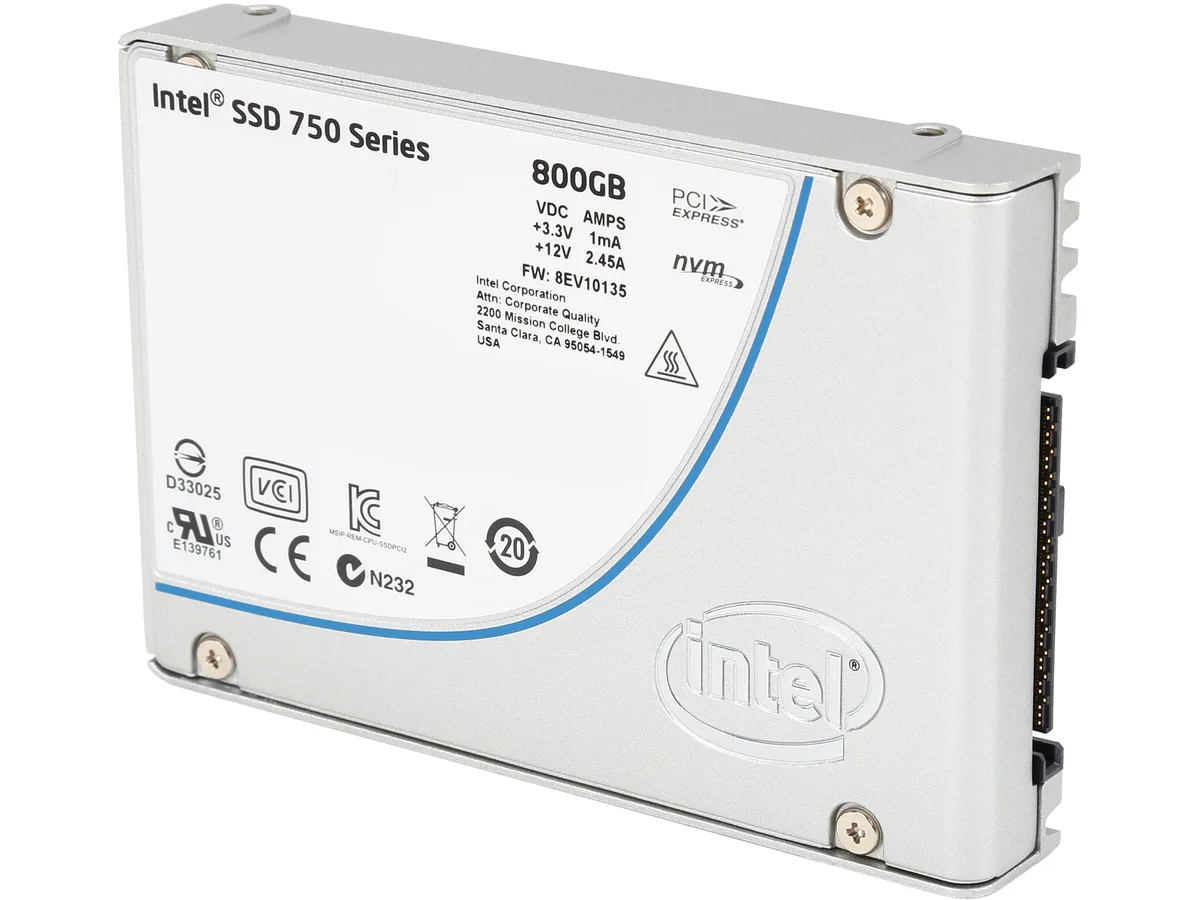
A 2.5-inch internal SSD with 800GB capacity, PCIe 3.0 x4 interface, up to 2500 MBps sequential read and 1200 MBps sequential write, plus 420,000 IOPS random read and 210,000 IOPS random write
The Intel 750 Series SSDPE2MW800G4X1 is a 2.5-inch internal solid state drive built for desktop enthusiasts and workstation users who need low-latency, high-throughput storage. It provides 800GB of MLC capacity and connects through a PCI-Express 3.0 x4 interface. Sequential reads reach up to 2100 MBps while sequential writes reach up to 800 MBps. Random 4KB performance delivers up to 420000 IOPS for reads and 210000 IOPS for writes.
Verify that your motherboard or add-in adapter exposes a PCI-Express 3.0 x4 electrical connection and that the 2.5-inch bay can accept a 15.00mm drive height. Confirm the platform BIOS supports booting from a PCIe-attached SSD if you intend to use it as the primary OS drive. Ensure your power supply can deliver up to 12W active power for write workloads and that airflow keeps the device within the 0°C to 70°C operating range.
The package includes a cable compatible with motherboard U.2 connectors, allowing the 2.5-inch drive to plug straight into a U.2 port without an extra adapter bracket. This simplifies installation in chassis where the U.2 header is positioned away from traditional drive bays. The cable carries the full four lanes of PCIe 3.0 and does not alter the drive's rated performance or power characteristics.
| Brand | Intel |
|---|---|
| Series | 750 Series |
| Model | SSDPE2MW800G4X1 |
| Device Type | Internal Solid State Drive (SSD) |
| Used For | Consumer |
| Form Factor | 2.5" |
| Capacity | 800GB |
| Memory Components | MLC |
| Interface | PCI-Express 3.0 x4 |
| Max Sequential Read | Up to 2100 MBps |
| Max Sequential Write | Up to 800 MBps |
| 4KB Random Read | Up to 420,000 IOPS |
| 4KB Random Write | Up to 210,000 IOPS |
| MTBF | 1,200,000 hours |
| Features | Performance Unleashed PCIe 3.0 X4 NVM Express SSD The Intel Solid State Drive (SSD) 750 Series is Intel's latest SSD for the high performance client and workstation storage market. Intel SSD 750 Series delivers the future of storage today with Intel's first PCIe based consumer SSD, combining four lanes of PCIe 3.0 with state-of-the-art NMV Express (NVMe) interface for truly amazing performance. |
| Power Consumption (Idle) | 4W |
| Power Consumption (Active) | Read: 9W Write: 12W |
| Operating Temperature | 0°C ~ +70°C |
| Height | 15.00mm |
| Width | 70.00mm |
| Depth | 101.00mm |
| Weight | 125.00g |
| Poids d’expédition | 0.32 kg |
| Dimensions du colis | 175 × 135 × 53 mm |
Autres versions de ce modèle
Même famille, mémoire, ventirad ou fréquence différents — comparez avant de vous décider.
Également dans ce rayon
Même rayon, même caisse — huit monnaies et un taux bloqué 30 minutes.
Ce que vous envoyez, et ce dans quoi vous lisez les prix.
Envoyé depuis votre portefeuille à la caisse
Affichage seul — le catalogue est libellé en dollars
Aucune monnaie ne correspond.
Choisissez la langue dans laquelle le site vous parle.
Première visite ?
Vous avez déjà un compte ?
Il n’y a pas de réinitialisation automatique : cette boutique n’envoie aucun e-mail, il n’existe donc aucun lien à usage unique à demander. Laissez l’adresse sur le compte, elle sera traitée à la main.
Demande enregistrée
Rien n’arrivera dans votre boîte de réception — cette boutique n’envoie aucun e-mail. Quelqu’un s’en occupe à la main.
Vous l’avez retrouvé ?