Andromeda Insights
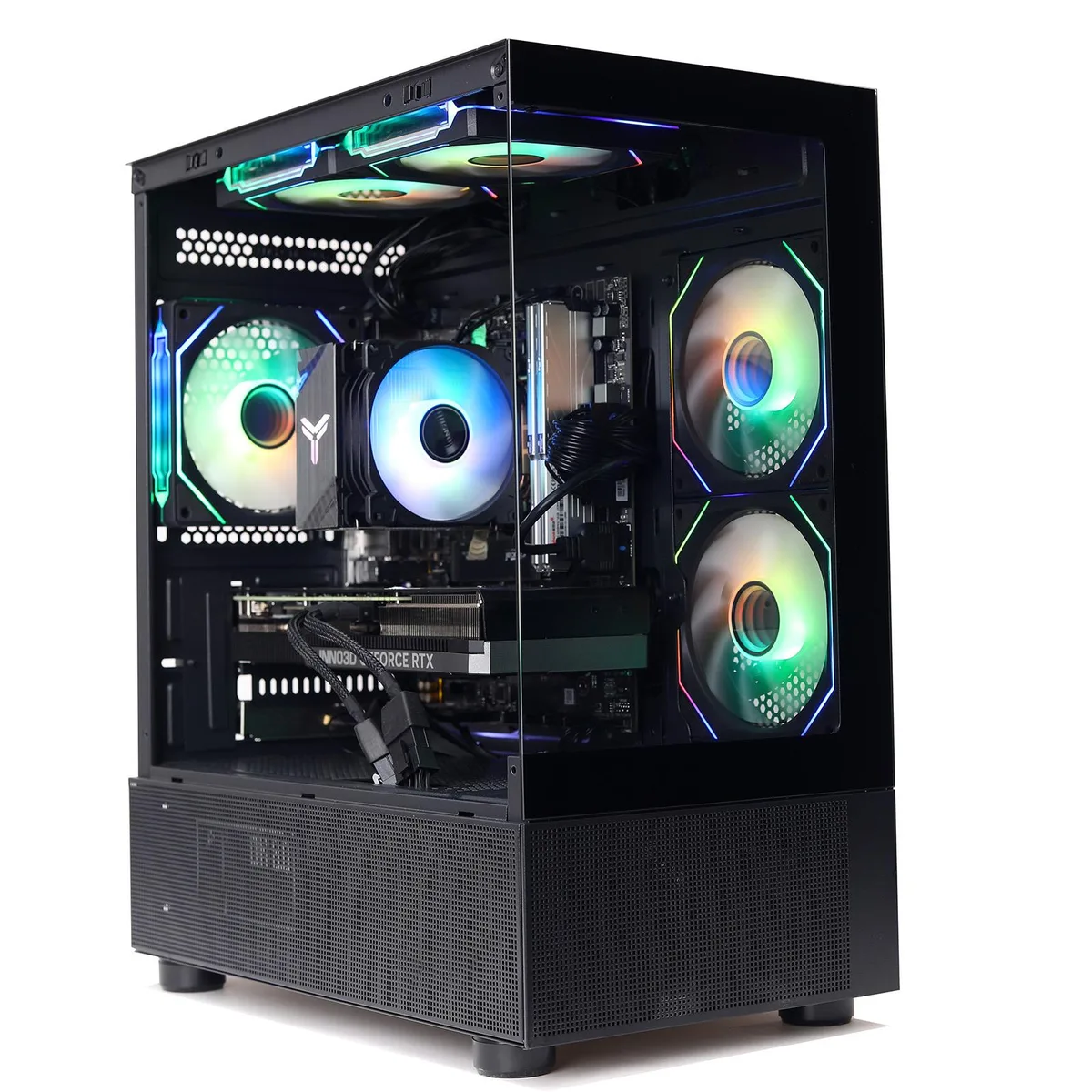
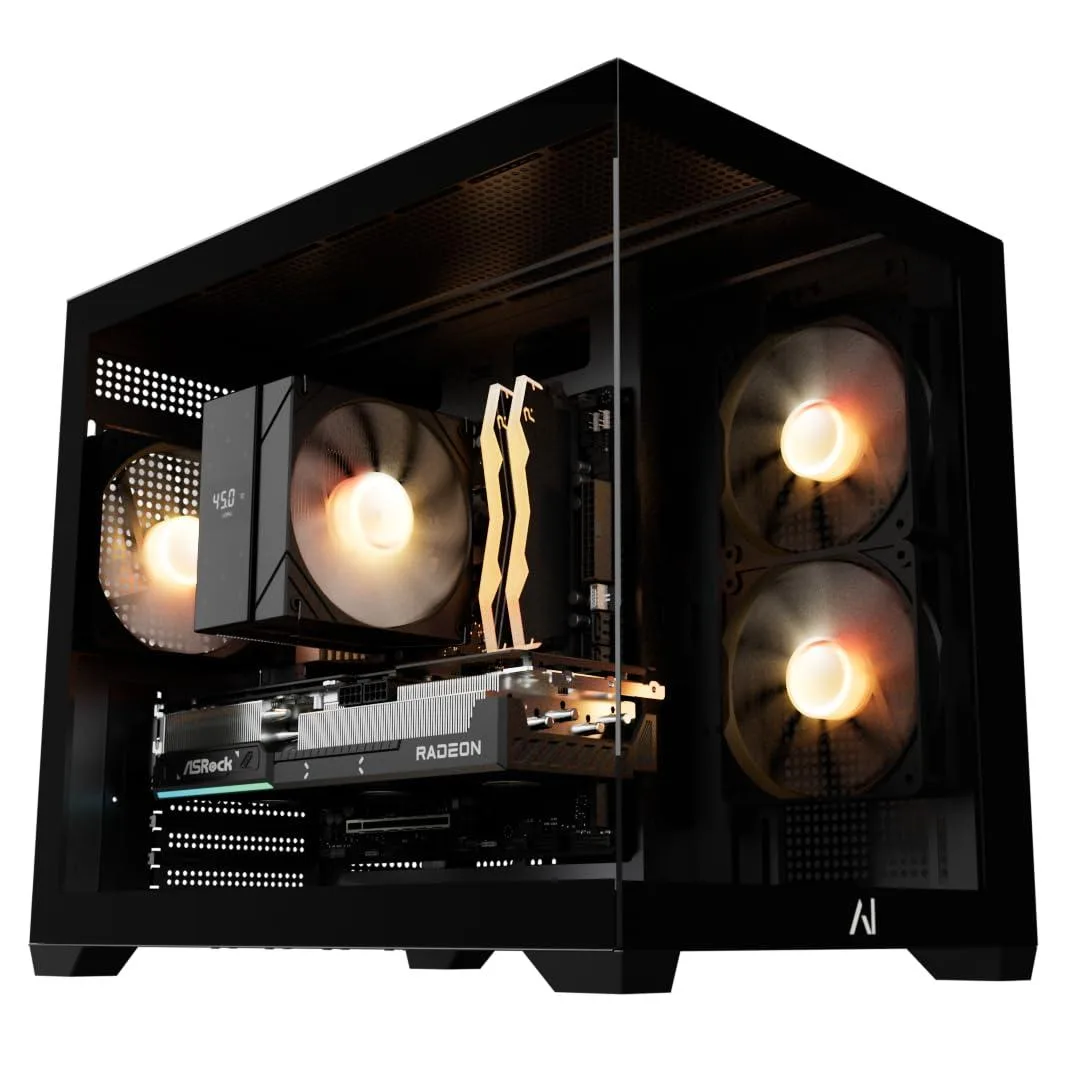
Andromeda Insights UBG-97XT16GB-9600X-1TB-32GB-850W-AIR-BLK gaming PC
- 2025
- Gaming
$1,457.99
0.01838598BTC
In stockWe take cryptocurrency — so the coins you hold can buy real hardware.Pay in crypto, spend it on real hardware. Free insured shipping worldwide over $399. Plain, unbranded boxes, sent from Germany.Free insured shipping over $399. Your rate is locked for 30 minutes once checkout opens.Rate locked 30 minutes. Every item sealed, serial-checked and covered by a 24-month warranty.Sealed, 24-month warranty.


Adamant Custom
Liquid-cooled desktop with 8-core Ryzen 7 9800X3D, RTX 5080 graphics, 128GB DDR5 memory and 2TB NVMe storage runs Windows 11 Pro
This new desktop combines an eight-core AMD Ryzen 7 9800X3D processor at 4.7 GHz with an Nvidia GeForce RTX 5080 graphics card. It ships with 128 GB of DDR5 memory and a 2 TB Samsung 990 PRO NVMe SSD. Windows 11 Pro is pre-installed and the CPU is cooled by a 240 mm liquid cooler. The system is built on a TUF X870 motherboard and powered by a 1200 W 80 PLUS Gold supply.
The 128 GB DDR5 capacity and RTX 5080 16 GB GPU handle large datasets, rendering and local AI workloads. Four memory slots allow expansion to 192 GB. Buyers who need more than 2 TB of primary storage or who require multiple additional GPUs should look at a different platform. The single included SSD leaves three M.2 slots open for growth.
The combination of high-capacity DDR5 and a 16 GB graphics card determines whether this workstation fits your pipeline. Memory runs in four slots with a 192 GB ceiling. The GPU connects via PCI Express x16 and the motherboard provides USB4 at 40 Gbps, 2.5 Gb Ethernet and Wi-Fi 7. This spec set targets memory-intensive creative and AI tasks.
| Release Year | 2026 |
|---|---|
| Type | Business Desktops & Workstations |
| Form Factor | Desktop |
| AI Features | AI Ready |
| Usage | Work / Business |
| Color | Black |
| Cooling System | Liquid Cooling |
| Operating System | Windows 11 Pro |
| Windows 11 | Ready |
| CPU Type | AMD Ryzen 7 9000 Series |
| CPU Name | AMD Ryzen 7 9800X3D |
| CPU Socket Type | AM5 |
| GPU/VGA Type | GeForce RTX 5080 |
| Graphics Interface | PCI Express x16 |
| Memory Capacity | 128GB DDR5 |
| Memory Slots (Available/Total) | 4 total |
| Maximum Memory Supported | 192 GB |
| SSD | 2TB NVMe |
| HDD | No |
| Optical Drive Type | No |
| Screen Size | No Screen |
| Audio Chipset | Integrated |
| Audio Channels | 7.1 channels |
| LAN Chipset | Integrated |
| LAN Speed | 2.5Gbps |
| WLAN | 802.11be Wireless LAN |
| WiFi Generation | Wi-Fi 7 |
| Bluetooth | Bluetooth 5.4 |
| RJ45 | 1 port |
Mount the radiator to the case fan slots, attach the pump block to the AM5 socket with the supplied brackets, then connect the pump header and radiator fans to the motherboard; the step most often missed is plugging the pump into the dedicated AIO_PUMP header instead of a standard CPU_FAN header.
The sealed AIO loop requires no fluid changes; plan to replace the two 140 mm radiator fans when noise or airflow drops, typically after several years of continuous operation.
The 240 mm radiator surface area becomes the bottleneck, allowing coolant temperature to rise until the CPU hits its thermal ceiling and reduces boost clocks below the 5.20 GHz maximum.
Also in this aisle
Same shelf, same checkout — eight coins and a 30-minute rate lock.
What you pay in, and what you read prices in.
Sent from your wallet at checkout
Display only — the catalogue is priced in USD
No currency matches that.
Pick the language the site speaks to you in.
New here?
Already have one?
There is no automatic reset: this shop sends no mail, so there is no one-time link to ask for. Leave the address on the account and it gets picked up by hand.
Request noted
Nothing is on its way to your inbox — this shop sends no mail at all. Someone picks these up by hand.
Remembered it?