

EVGA
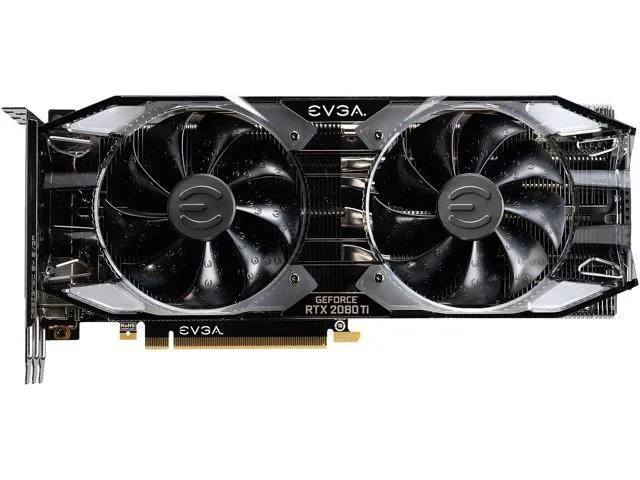
EVGA GeForce RTX 2080 Ti XC2 ULTRA GAMING graphics card
GeForce RTX 2080 Ti graphics card with 11GB GDDR6 memory, 1650 MHz boost clock and 4352 CUDA cores for high-resolution gaming
- Memory TypeGDDR5
- Real-time RTX lighting with Turing architecture
- 11 GB GDDR6 memory at 11264 MB capacity
- Boost clock reaches 1650 MHz for high frame rates
- iCX2 cooling with 9 sensors and dual HDB fans
- Adjustable RGB LED matches any build theme
11 GB GDDR6 graphics card
The EVGA GeForce RTX 2080 Ti XC2 ULTRA GAMING is a high-end GPU built on the Turing architecture. It targets enthusiasts and creators who need substantial frame-buffer capacity for 4K gaming or professional rendering workloads. The card ships with a real boost clock of 1650 MHz and 4352 CUDA cores for heavy parallel compute.
Practical interface limits
The board connects through a PCIe 3.0 x16 slot and provides DisplayPort 1.4 plus HDMI 2.0b outputs with HDCP 2.2 support. NVLink enables two-way SLI for multi-GPU scaling where applications allow. The USB Type-C port with VirtualLink simplifies tethered VR headset connectivity.
Dual HDB fans and iCX2 cooling
Dual hydraulic-dynamic-bearing fans work alongside nine iCX thermal sensors to balance airflow and acoustic output under load. An adjustable RGB LED zone integrates with EVGA Precision X1 software for lighting coordination. The metal backplate adds structural rigidity and assists heat dissipation during extended sessions.
Highlights
- Real-time RTX lighting with Turing architecture
- 11 GB GDDR6 memory at 11264 MB capacity
- Boost clock reaches 1650 MHz for high frame rates
- iCX2 cooling with 9 sensors and dual HDB fans
- Adjustable RGB LED matches any build theme
Specifications
| Memory Type | GDDR5 |
|---|
Questions about this item
Which EVGA RTX 2080 Ti XC2 ULTRA GAMING model should I choose?
The card is sold as the single 11G-P4-2387-KR SKU with 11264MB GDDR6 memory, a 1650 MHz boost clock and 4352 CUDA cores.
What does the 1650 MHz boost clock mean once the card is in my system?
That is the rated GPU Boost frequency the core targets under load; actual clocks will vary with temperature, power limit and the workload you are running.
What does the PCIe 3.0 interface cap in practice?
The x16 PCIe 3.0 link provides up to 16 GT/s per lane, which is the maximum bandwidth this card can use for data transfers to the rest of the system.
Also in this aisle
People compared these
Same shelf, same checkout — eight coins and a 30-minute rate lock.


Silverstone Technology
SilverStone Technology Strider 1200W 80 Plus Platinum Modular Power Supply
- ATX Mid Tower
- 1200W
$324.03
0.00418449BTC
In stock