

Pimoroni
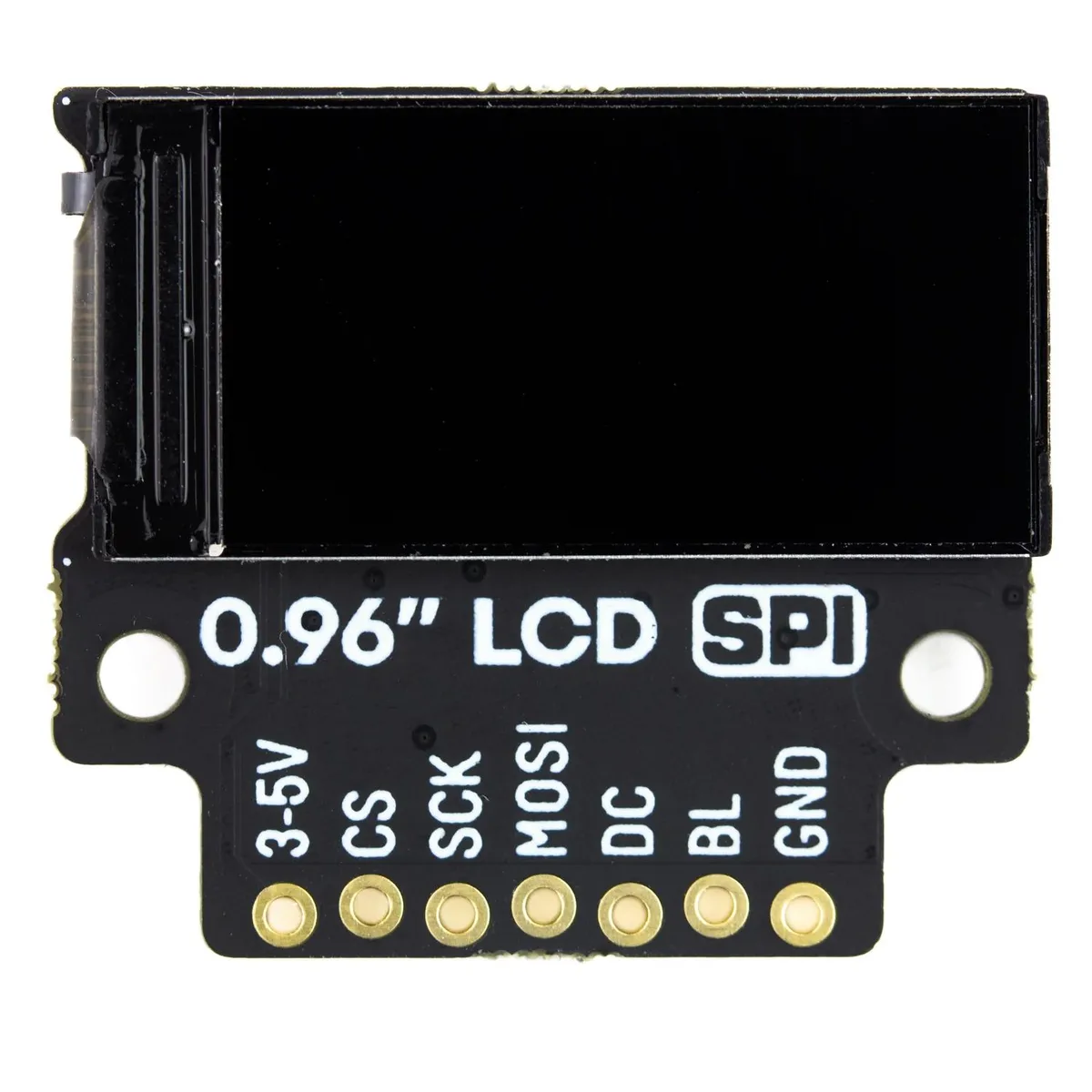
Pimoroni PIM436 0.96" SPI Colour LCD (160x80) Breakout
A compact 0.96" SPI colour LCD with 160x80 resolution and IPS viewing angles for Raspberry Pi or Arduino projects
- 96" IPS colour LCD adds bright project readouts
- 160 x 80 pixel widescreen 2:1 aspect ratio
- SPI interface connects directly to Raspberry Pi or Arduino
- 3 V and 5 V logic compatible with reverse polarity protection
- Python library for Pi plus C++ and MicroPython for Pico
Compact SPI LCD for microcontroller projects
This 0.96" colour display adds a 160x80 pixel readout to Raspberry Pi, Arduino or Pico builds. The 2:1 widescreen aspect ratio suits status text, simple graphics or sensor dashboards. Python, C++ and MicroPython libraries speed integration for hobbyists and prototype engineers.
IPS panel with reverse polarity protection
An IPS panel gives wide viewing angles so data stays readable from off-centre positions. The board accepts 3.3V or 5V logic without level shifters and includes reverse polarity protection to guard against wiring mistakes. Header pins suit breadboard or direct solder mounting for permanent installs.
SPI bandwidth limits animation speed
The serial peripheral interface caps frame rates, so full-screen video or fast scrolling is impractical. Projects needing high refresh rates or larger colour depth should consider parallel or RGB interfaces instead. The small 160x80 resolution also restricts detailed graphics or multi-line text layouts.
Highlights
- 96" IPS colour LCD adds bright project readouts
- 160 x 80 pixel widescreen 2:1 aspect ratio
- SPI interface connects directly to Raspberry Pi or Arduino
- 3 V and 5 V logic compatible with reverse polarity protection
- Python library for Pi plus C++ and MicroPython for Pico
Specifications
No published specifications for this item yet.
Questions about this item
What resolution and aspect ratio does the 0.96" SPI LCD provide?
The display is 160 by 80 pixels with a 2:1 widescreen aspect ratio.
What pins and voltage levels does the breakout require to connect?
It uses a standard SPI pinout and is compatible with both 3.3V and 5V logic levels.
Which libraries let me drive the screen from a Raspberry Pi Pico?
Use the C++ or MicroPython libraries provided for Pico to initialise the display over SPI.
Also in this aisle
People compared these
Same shelf, same checkout — eight coins and a 30-minute rate lock.


Mushkin Enhanced
Mushkin Enhanced 4GB DDR2-800 CL6 SoDIMM Apple 971741A memory upgrade
$104.99
0.0013367BTC
In stock

SK hynix
SK hynix HYMD232M646C6-J 256MB DDR 333MHz PC2700 CL2.5 SODIMM laptop RAM
- 4GB (2 x 2GB)
$7.99
0.00010173BTC
In stock