

NEMIX RAM
NEMIX RAM DDR5-5600 2TB (16x128GB) ECC RDIMM CL46 1.1V Supermicro H14SST-G memory upgrade
- 2TB (16 x 128GB)
- 288-Pin DDR5 RDIMM
62.908,99 US$
0.79218493BTC
En stockAceptamos criptomonedas — así, las criptos que usted tiene pueden comprar hardware real.Pague en cripto y gástela en hardware real. Envío asegurado gratis a nivel mundial a partir de $399. Cajas neutras, sin marca, enviadas desde Alemania.Envío asegurado gratis a partir de $399. Su cotización queda bloqueada 30 minutos en cuanto se abre el pago.Cotización bloqueada 30 minutos. Todos los artículos vienen sellados, con el número de serie verificado y cubiertos por una garantía de 24 meses.Sellado, con 24 meses de garantía.
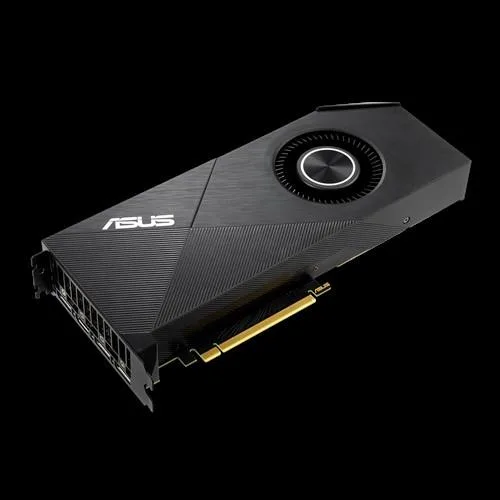


ASUS
A GeForce RTX 2080 with 8 GB GDDR6 memory, 2944 CUDA cores, a 1740 MHz boost clock and a 260 W TDP in a blower-style cooler for multi-GPU builds
This graphics card uses the NVIDIA RTX architecture with 2944 CUDA cores and 8GB GDDR6 memory on a 256-bit bus. It is built for users who need reliable compute performance in multi-GPU systems or cases with restricted airflow. The Turbo design focuses on exhausting heat directly out of the chassis rear. A 260W TDP requires a suitably rated power supply.
The card installs into a standard PCIe 3.0 x16 slot and occupies two expansion brackets at the rear. Its blower-style cooler exhausts hot air out the back, which helps in tight builds but demands good case ventilation to prevent heat buildup. Ensure the power connectors are fully seated and that no cables obstruct the intake side of the shroud. Driver installation follows the standard NVIDIA package for the RTX 2080.
Under continuous load the GPU maintains its 1740 MHz boost clock within the 260W thermal limit. The radial fan spins faster to move air through the heatsink and out the rear vent, which raises acoustic output compared to open-air coolers. Memory runs at 14 Gbps across the 256-bit interface without throttling in typical gaming or compute workloads. Temperatures stabilise higher than open-air designs but remain within specification.
| Thermal Design Power | 260W |
|---|
Use GPU monitoring software such as GPU-Z or MSI Afterburner to observe the core frequency under a 3D load; the sensor should report speeds approaching 1740 MHz when the card is operating within its 260 W power limit and thermal targets.
The card ships only with the graphics board itself; you must supply two 8-pin PCIe power connectors from your power supply to meet the 260 W TDP requirement.
Compare the factory boost clock — this Turbo EVO model reaches 1740 MHz versus the 1710 MHz reference — along with the blower-style cooler designed for multi-GPU or restricted-airflow chassis.
También en este pasillo
Mismo estante, mismo pago — ocho criptomonedas y un tipo de cambio fijado 30 minutos.
Lo que usted paga, y la moneda en la que lee los precios.
Se envía desde su billetera al finalizar la compra
Solo informativo — el catálogo está en dólares
Ninguna moneda coincide.
Elija el idioma en el que el sitio le habla.
¿Es nuevo aquí?
¿Ya tiene una?
No existe ningún restablecimiento automático: esta tienda no envía correos electrónicos, así que no hay ningún enlace de un solo uso que solicitar. Deje la dirección asociada a la cuenta y se atenderá de forma manual.
Solicitud registrada
No hay nada de camino a su bandeja de entrada: esta tienda no envía correos en absoluto. Alguien se encarga de esto manualmente.
¿La recordó?


