ASUS
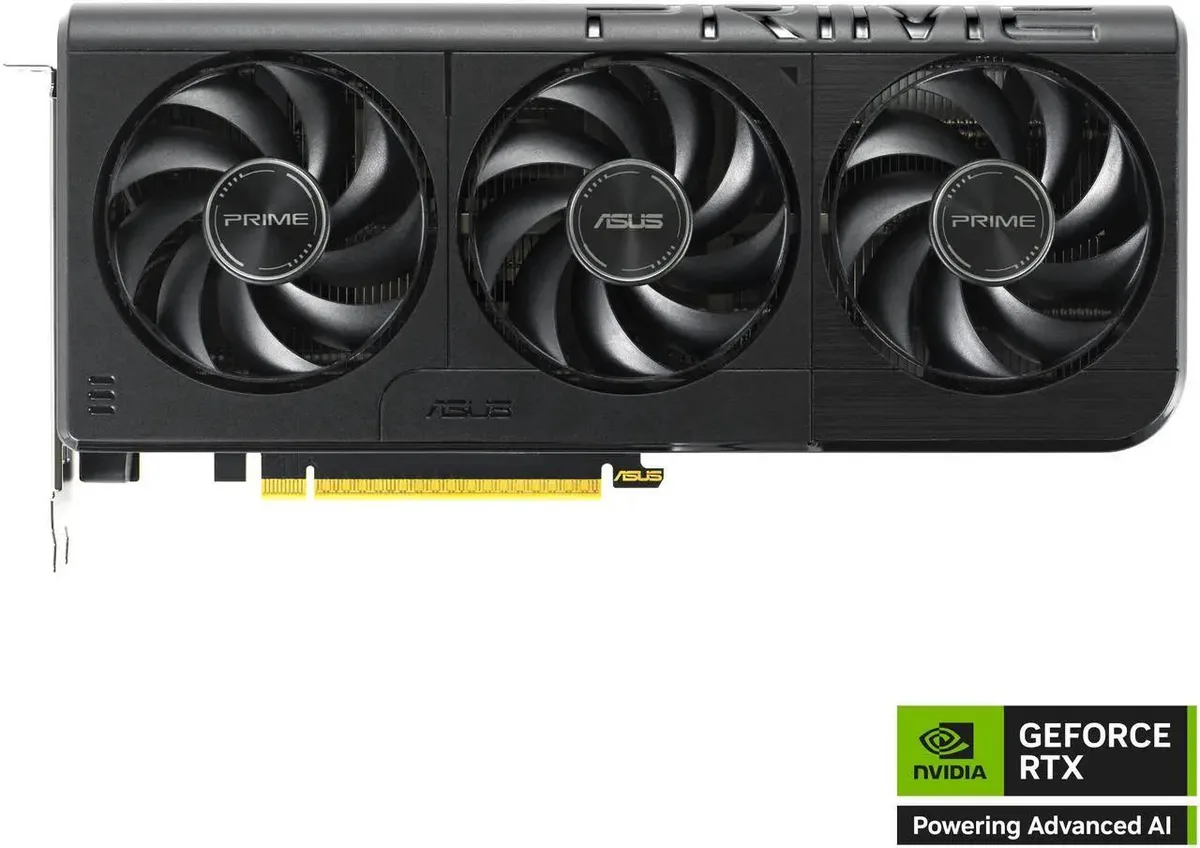
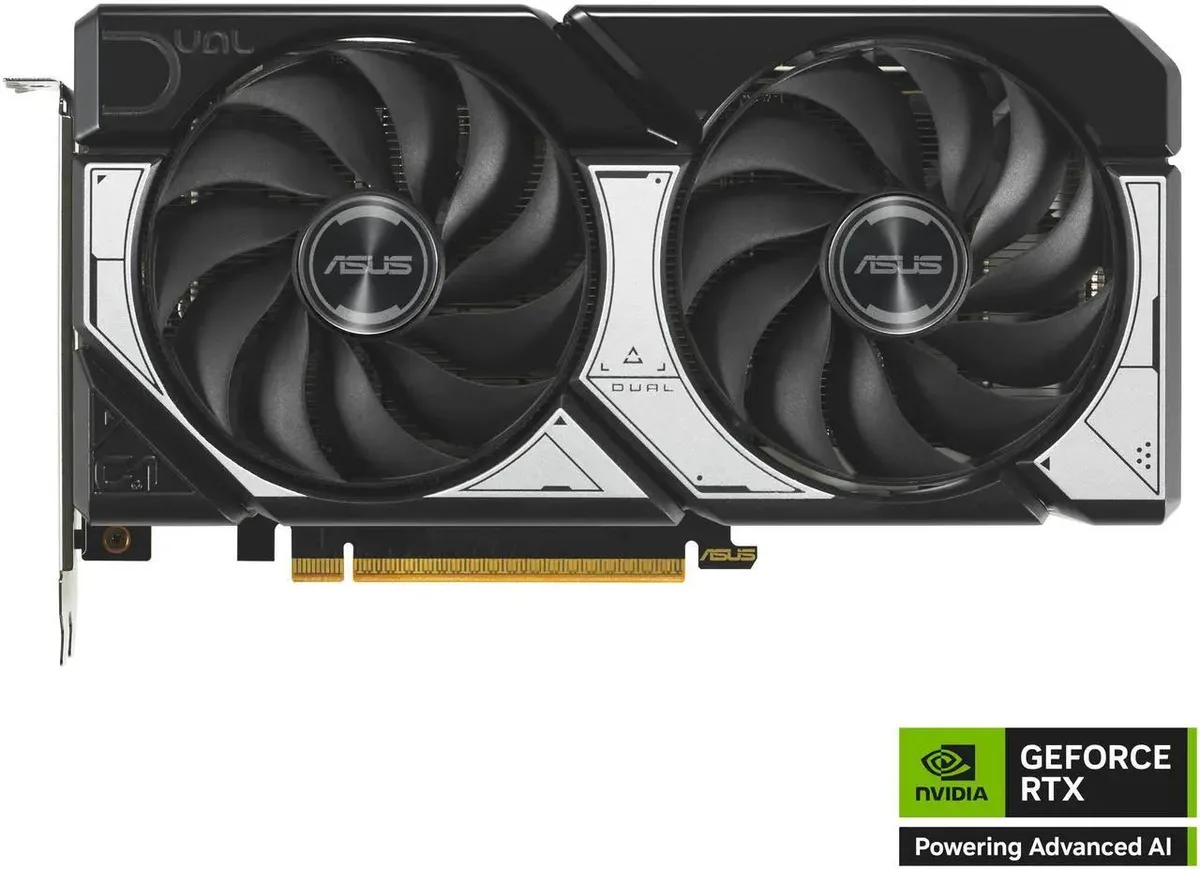
ASUS Dual GeForce RTX 5060 Ti 8GB GDDR7 OC graphics card
- PCI Express 5.0 x8
- NVIDIA
$919.99
0.01188525BTC
In stockWe take cryptocurrency — so the coins you hold can buy real hardware.Pay in crypto, spend it on real hardware. Free insured shipping worldwide over $399. Plain, unbranded boxes, sent from Germany.Free insured shipping over $399. Your rate is locked for 30 minutes once checkout opens.Rate locked 30 minutes. Every item sealed, serial-checked and covered by a 24-month warranty.Sealed, 24-month warranty.


ASUS
An NVIDIA GeForce RTX 5060 Ti with 8 GB GDDR7 memory on a 128-bit bus, 4608 CUDA cores, boost clocks up to 2632 MHz, PCIe 5.0 x8, one HDMI 2.1b and three DisplayPort 2.1b outputs
The ASUS Dual GeForce RTX 5060 Ti O8G is a graphics card built on the NVIDIA Blackwell architecture. It delivers 4608 CUDA cores and 8GB of GDDR7 memory across a 128-bit interface running at 28 Gbps. The card connects via a PCI Express 5.0 x8 slot and fits a standard ATX form factor.
This card suits players who want current-generation features such as DirectX 12 Ultimate and OpenGL 4.6 on a mid-range budget. It supports up to four monitors through one HDMI 2.1b and three DisplayPort 2.1b outputs. Builders needing more than 8GB of VRAM for heavy texture workloads or compute tasks should consider a higher-capacity model.
The 8GB frame buffer on a 128-bit bus defines the card's practical ceiling for texture-heavy scenes at higher resolutions. If your workflow or target resolution demands a wider bus or larger VRAM pool, this specification makes the card the wrong fit. For mainstream gaming at 1080p and 1440p, the memory subsystem matches the GPU's 4608 cores and 2632 MHz OC boost clock.
| Brand | ASUS |
|---|---|
| Series | Dual |
| Model | DUAL-RTX5060TI-O8G |
| Part Number | 90YV0MP2-MVAA00 |
| Interface | PCI Express 5.0 x8 |
| Chipset Manufacturer | NVIDIA |
| GPU Series | NVIDIA GeForce RTX 50 Series |
| GPU | GeForce RTX 5060 Ti |
| Architecture | Blackwell |
| Boost Clock | OC mode: 2632MHz Default mode: 2602MHz (Boost Clock) |
| CUDA Cores | 4608 |
| Effective Memory Clock | 28 Gbps |
| Memory Size | 8GB |
| Memory Interface | 128-Bit |
| Memory Type | GDDR7 |
| DirectX | DirectX 12 Ultimate |
| OpenGL | OpenGL 4.6 |
| Multi-Monitor Support | 4 |
| HDMI | 1 x HDMI 2.1b |
| DisplayPort | 3 x DisplayPort 2.1b |
| Color | Black |
| Max Resolution | 7680 x 4320 |
| CrossFireX Support | No |
| SLI Support | No |
| Virtual Reality Ready | Yes |
| Cooler | Double Fans |
| Recommended PSU Wattage | 550W |
| Power Connector | 8-Pin |
| HDCP Ready | Yes |
| Form Factor | ATX |
| Max GPU Length | 229 mm |
| Card Dimensions (L x H) | 229 x 120 x 50mm |
| Slot Width | 2.5 Slots |
| Package Contents | ASUS GPU Tweak III & MuseTree & GeForce Game Ready Driver & Studio Driver: please download all software from the support site. |
Other versions of this model
Same family, different memory, cooler or clock — compare before you commit.
Align the card with the PCI Express 5.0 x8 slot, press firmly until the retention latch clicks, then connect the required power cables from the PSU. The step most people miss is attaching those power cables before closing the case.
The dual-fan cooler should be cleared of dust every few months using compressed air. If a fan bearing becomes noisy or stops spinning, the fan module can be replaced; the heatsink and vapor chamber do not require scheduled replacement.
The 128-bit memory interface and 28 Gbps GDDR7 memory set the bandwidth ceiling. In workloads that stream large textures or datasets continuously, that bandwidth limit is reached before the 4608 CUDA cores or the 2632 MHz boost clock hit their maximum throughput.
Also in this aisle
Same shelf, same checkout — eight coins and a 30-minute rate lock.
What you pay in, and what you read prices in.
Sent from your wallet at checkout
Display only — the catalogue is priced in USD
No currency matches that.
Pick the language the site speaks to you in.
New here?
Already have one?
There is no automatic reset: this shop sends no mail, so there is no one-time link to ask for. Leave the address on the account and it gets picked up by hand.
Request noted
Nothing is on its way to your inbox — this shop sends no mail at all. Someone picks these up by hand.
Remembered it?