

NEMIX RAM
NEMIX RAM DDR5-5600 2TB (16x128GB) ECC RDIMM CL46 1.1V Supermicro H14SST-G memory upgrade
- 2TB (16 x 128GB)
- 288-Pin DDR5 RDIMM
$62,908.99
0.78720862BTC
In stockWe take cryptocurrency — so the coins you hold can buy real hardware.Pay in crypto, spend it on real hardware. Free insured shipping worldwide over $399. Plain, unbranded boxes, sent from Germany.Free insured shipping over $399. Your rate is locked for 30 minutes once checkout opens.Rate locked 30 minutes. Every item sealed, serial-checked and covered by a 24-month warranty.Sealed, 24-month warranty.


LORDWORLD
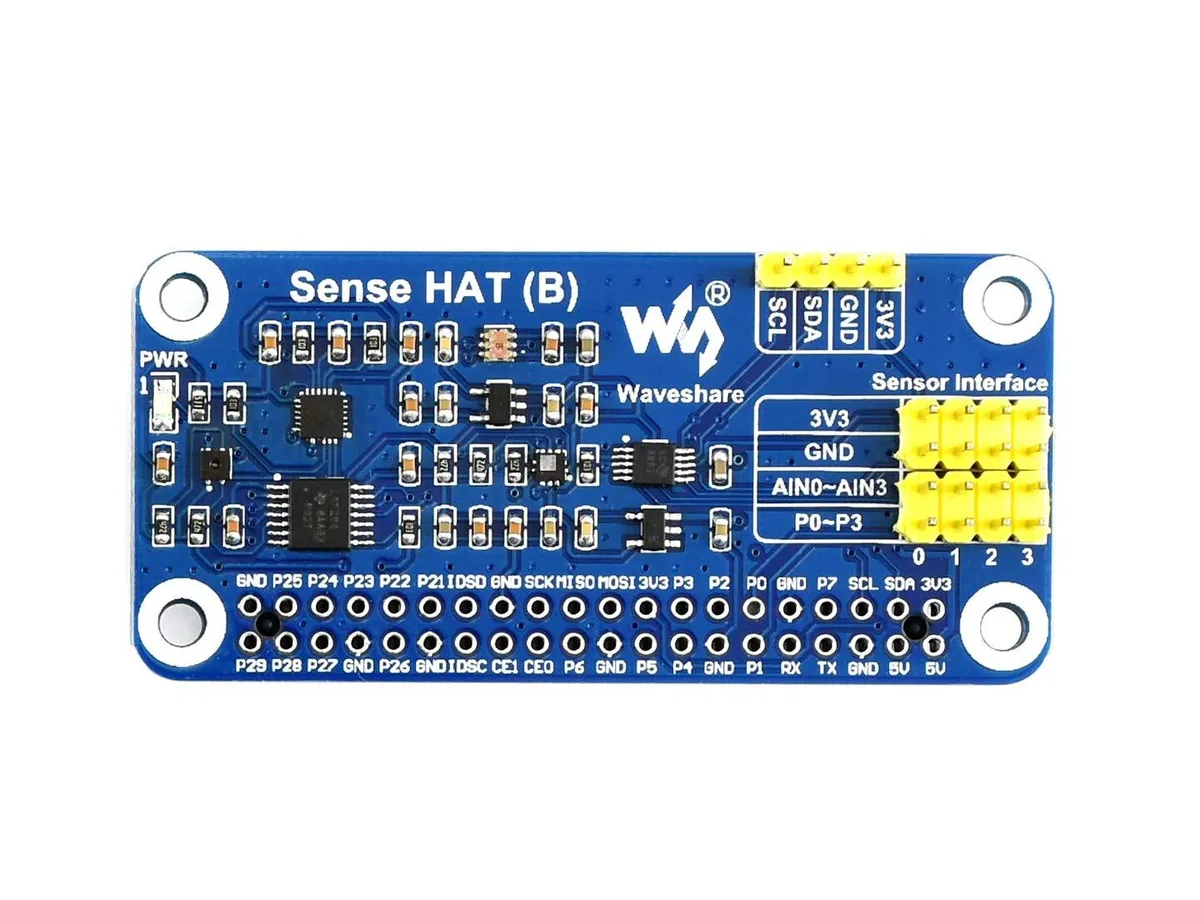
Adds motion, environmental and colour sensing plus four-channel ADC to a Raspberry Pi via the 40-pin header
The LORDWORLD Sense HAT (B) is a development board built for Raspberry Pi projects that need motion and environmental data. It mounts on the standard 40PIN GPIO header and communicates through the I2C interface. Makers working on robots, weather stations or colour-sensing applications can read nine axes of movement plus temperature, humidity, pressure and colour from a single add-on. The board also exposes I2C control pins for use with other hosts such as STM32.
This HAT replaces a collection of separate breakout boards by integrating the ICM20948 nine-axis sensor, SHTC3 temperature and humidity sensor, LPS22HB pressure sensor and TCS34725 colour sensor together with an ADS1015 four-channel 12-bit ADC. The jump is worth it when a project requires simultaneous orientation, environmental and colour data without wiring multiple modules. Builders who only need a single sensor type may find individual boards simpler and more cost-effective.
All onboard sensors share the I2C bus, so address conflicts can arise if additional I2C devices use the same addresses. The ADS1015 provides four single-ended ADC channels at 12-bit resolution, limiting the precision of external analogue sensors connected through the expansion header. The 40PIN GPIO pass-through preserves access to other Raspberry Pi pins, but the board does not add extra GPIO or high-speed interfaces beyond I2C.
| Brand | LORDWORLD |
|---|
The board uses the standard 40-pin GPIO extension header that matches the pinout on all Raspberry Pi series boards.
The sensors communicate over the Pi’s I²C pins (GPIO 2 and 3); enable the I²C interface in raspi-config before running any example code.
Both sensors are factory-calibrated digital devices with no user-replaceable parts; they do not require scheduled recalibration.
Also in this aisle
Same shelf, same checkout — eight coins and a 30-minute rate lock.
What you pay in, and what you read prices in.
Sent from your wallet at checkout
Display only — the catalogue is priced in USD
No currency matches that.
Pick the language the site speaks to you in.
New here?
Already have one?
There is no automatic reset: this shop sends no mail, so there is no one-time link to ask for. Leave the address on the account and it gets picked up by hand.
Request noted
Nothing is on its way to your inbox — this shop sends no mail at all. Someone picks these up by hand.
Remembered it?


