SK hynix
SK hynix HMA42GR7AFR4N-TF 16GB DDR4 2133MHz CL15 ECC Registered Dual Rank 1.2V 288-Pin Server RAM
- 16GB
- 288-Pin DDR4 SDRAM
$78.99
0.00100037BTC
In stockWe take cryptocurrency — so the coins you hold can buy real hardware.Pay in crypto, spend it on real hardware. Free insured shipping worldwide over $399. Plain, unbranded boxes, sent from Germany.Free insured shipping over $399. Your rate is locked for 30 minutes once checkout opens.Rate locked 30 minutes. Every item sealed, serial-checked and covered by a 24-month warranty.Sealed, 24-month warranty.


LORDWORLD
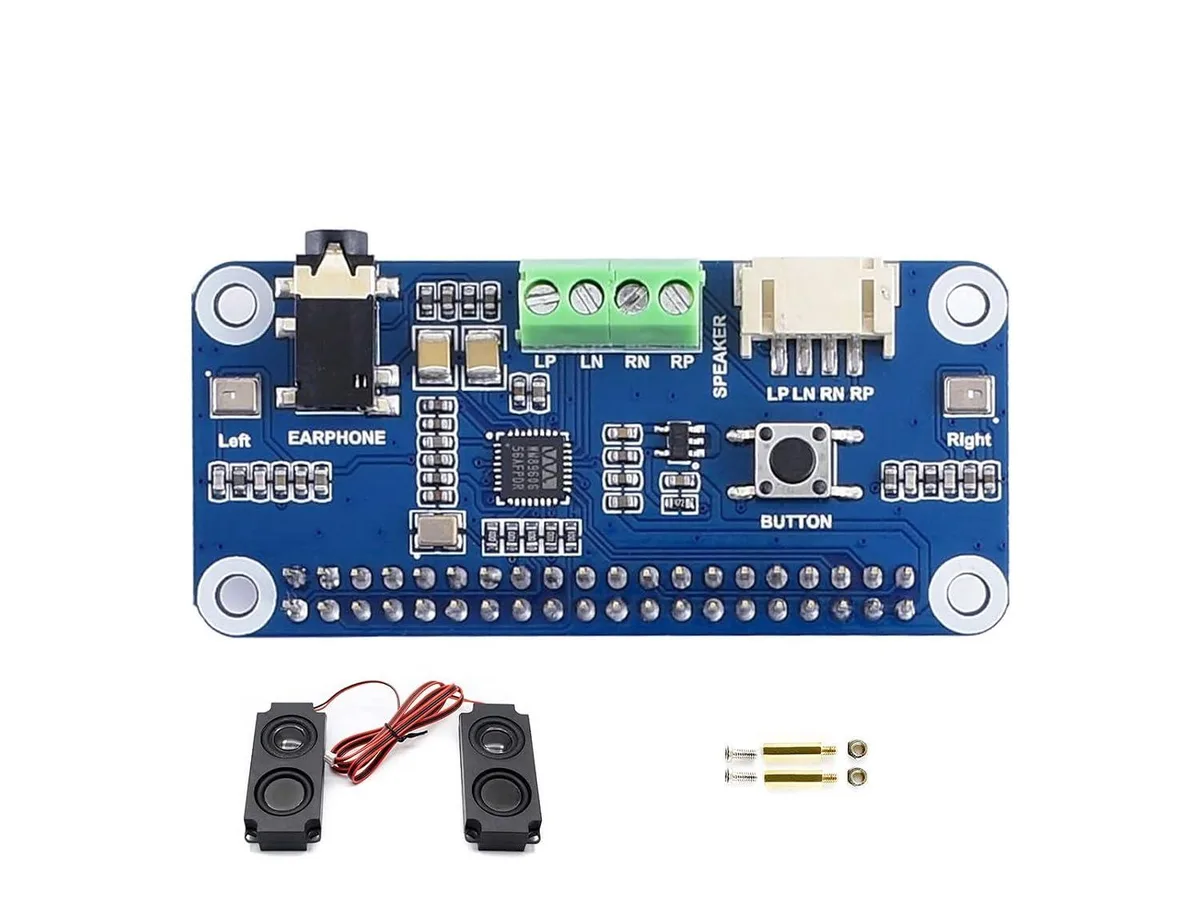
Adds stereo audio with dual MEMS microphones, a 3.5 mm headphone jack and speaker outputs to Raspberry Pi boards via the 40-pin header
The LORDWORLD WM8960 Audio HAT is a development board that adds high-fidelity audio input and output to Raspberry Pi single-board computers. It is intended for makers, students and engineers building voice-controlled devices, portable recorders or custom media players.
The board mounts directly onto the 40-pin GPIO header and exposes a 3.5 mm headphone jack plus a dual-channel speaker terminal block. Dual onboard MEMS microphones capture stereo audio while the WM8960 codec handles playback and recording through the I2S bus.
The low-power stereo codec draws minimal current from the Pi supply, so the host board’s existing cooling is sufficient. No active cooling or external power adapter is required and the module adds no audible noise during normal operation.
| Brand | LORDWORLD |
|---|
The WM8960 codec handles stereo playback and recording through the I2S link; the practical limits are those defined by the codec itself rather than the bus.
The board sits on the standard 40PIN GPIO extension header and adds a 3.5 mm earphone jack plus dual speaker terminals, so allow height for the jack and side space for speaker wires.
Many forget to enable the I2S overlay in config.txt before running the supplied Python scripts for play and record.
Also in this aisle
Same shelf, same checkout — eight coins and a 30-minute rate lock.
What you pay in, and what you read prices in.
Sent from your wallet at checkout
Display only — the catalogue is priced in USD
No currency matches that.
Pick the language the site speaks to you in.
New here?
Already have one?
There is no automatic reset: this shop sends no mail, so there is no one-time link to ask for. Leave the address on the account and it gets picked up by hand.
Request noted
Nothing is on its way to your inbox — this shop sends no mail at all. Someone picks these up by hand.
Remembered it?