GIGABYTE
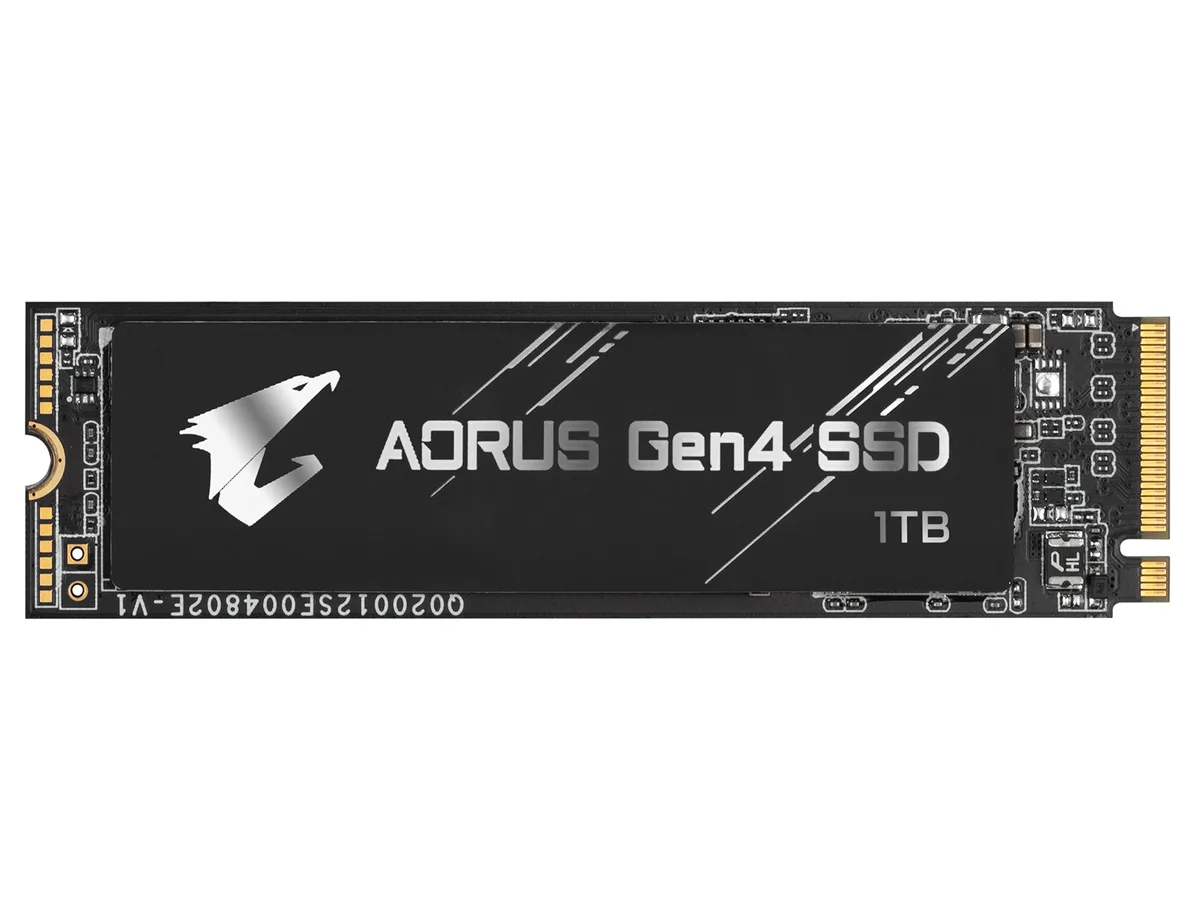
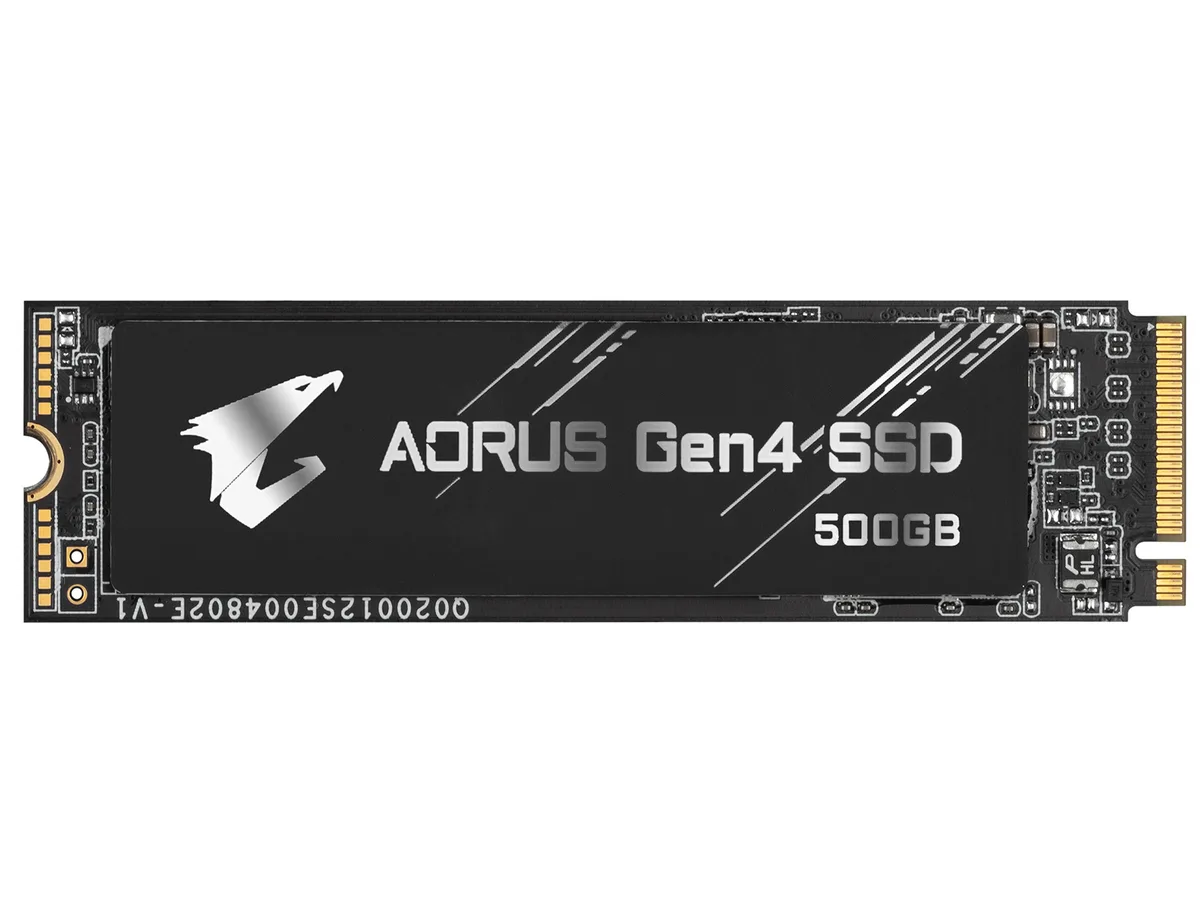
GIGABYTE AORUS Gen4 GP-AG4500G 500GB M.2 2280 internal SSD
- Internal Solid Stat…
- Consumer
75,99 US$
0.00097377BTC
Em stockAceitamos criptomoeda — para que as moedas que detém possam comprar material informático real.Pague em cripto, gaste-a em material informático real. Envio seguro gratuito para todo o mundo acima de 399 $. Caixas neutras, sem marca, expedidas a partir da Alemanha.Envio seguro gratuito acima de 399 $. A sua taxa fica bloqueada durante 30 minutos assim que abre a finalização da compra.Taxa bloqueada 30 minutos. Cada artigo é selado, o seu número de série é verificado, e está coberto por uma garantia de 24 meses.Selado, garantido 24 meses.

GIGABYTE
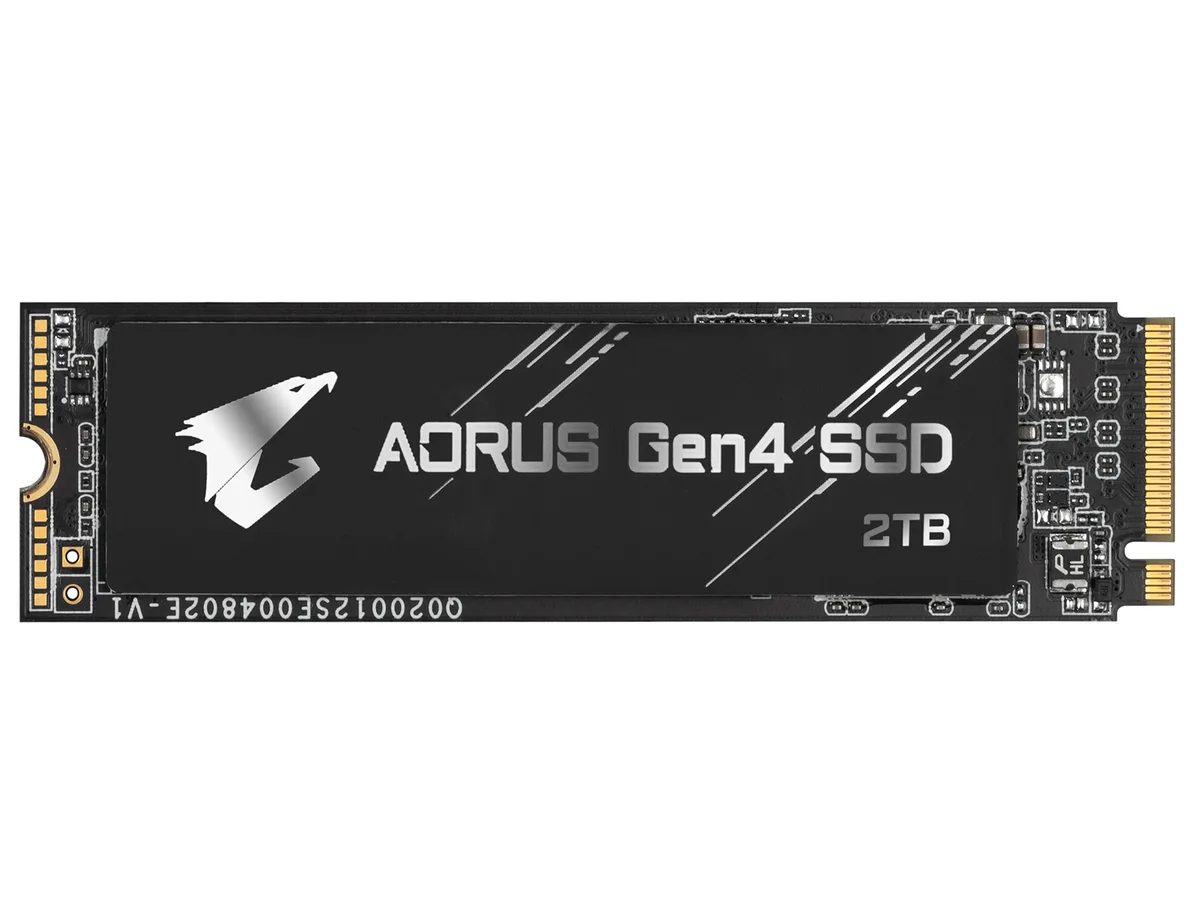
M.2 2280 NVMe drive with 2TB capacity, PCIe 4.0 x4 interface, Phison PS5016-E16 controller, DDR4 2GB cache, up to 5000 MBps read and 4400 MBps write, 750000 IOPS random read.
The GIGYTE AORUS Gen4 GP-AG42TB is a 2TB M.2 2280 internal solid state drive built for consumer desktops and laptops that support PCIe 4.0 x4. It uses 3D TLC NAND flash with 96 layers and a Phison PS5016-E16 controller manufactured on a 28nm process. The drive includes a DDR4 2GB DRAM cache and an integrated heatsink for thermal management.
This SSD connects through a PCI-Express 4.0 x4 link using the NVMe 1.3 protocol. Sequential throughput reaches up to 5000 MBps read and 4400 MBps write, while random performance hits 750000 IOPS read and 700000 IOPS write. These figures represent the practical ceiling of the PCIe 4.0 x4 interface; a PCIe 3.0 slot will restrict speeds to that older standard.
The Phison PS5016-E16 controller is the component that determines whether this drive matches your workload. It provides eight NAND channels with 32 CE targets, LDPC error correction, Wear Leveling and Over-Provision technologies. Its 28nm design and DDR4 caching enable the rated 800MT/s NAND throughput and the 1.77 million hour MTBF rating.
| Brand | GIGABYTE |
|---|---|
| Series | AORUS Gen4 |
| Model | GP-AG42TB |
| Part Number | GP-AG42TB |
| Device Type | Internal Solid State Drive (SSD) |
| Used For | Consumer |
| Form Factor | M.2 2280 |
| Capacity | 2TB |
| Memory Components | 3D TLC |
| Interface | PCI-Express 4.0 x4, NVMe 1.3 |
| Controller | Phison PS5016-E16 |
| Cache | DDR4 2GB |
| Max Sequential Read | Up to 5000 MBps |
| Max Sequential Write | Up to 4400 MBps |
| 4KB Random Read | Up to 750,000 IOPS |
| 4KB Random Write | Up to 700,000 IOPS |
| MTBF | 1.77 million hours |
| HeatSink | with HeatSink |
| Power Consumption (Idle) | 21.1 mW |
| Power Consumption (Active) | R: 6.5W; W: 6.6W |
| Operating Temperature | 0°C ~ +70°C |
| Storage Temperature | -40°C ~ +85°C |
| Height | 2.30mm |
| Width | 22.00mm |
| Depth | 80.00mm |
| Peso de envio | 0.11 kg |
| Dimensões da embalagem | 137 × 76 × 30 mm |
Outras versões deste modelo
Mesma família, memória, ventoinha ou frequência diferentes — compare antes de decidir.
The 2TB capacity provides ample space for an operating system, frequently played titles and a sizable media collection while leaving headroom for future installs.
Those peak sequential speeds mean large game levels load in seconds, 4K video scrubs smoothly and file transfers between fast NVMe drives finish noticeably quicker than on PCIe 3.0 drives.
The PCIe 4.0 x4 link doubles the theoretical bandwidth of the previous generation, letting the Phison PS5016-E16 controller sustain the advertised 5000 MBps reads and 4400 MBps writes when the system and workload can feed it.
Também nesta secção
Mesma prateleira, mesma finalização da compra — oito moedas e uma taxa bloqueada durante 30 minutos.
O que paga, e a moeda em que vê os preços.
Enviado da sua carteira ao finalizar a compra
Apenas informativo — o catálogo está em dólares
Nenhuma moeda corresponde.
Escolha o idioma em que o site lhe fala.
Nenhum idioma corresponde.
Ainda não tem conta?
Já tem conta?
Não existe reposição automática: esta loja não envia qualquer e-mail, pelo que não há nenhum link de utilização única para pedir. Deixe o endereço na conta e ele será tratado manualmente.
Pedido registado
Não vai chegar nada à sua caixa de entrada — esta loja não envia qualquer e-mail. Alguém trata disto manualmente.
Recordou-se dela?