SanDisk
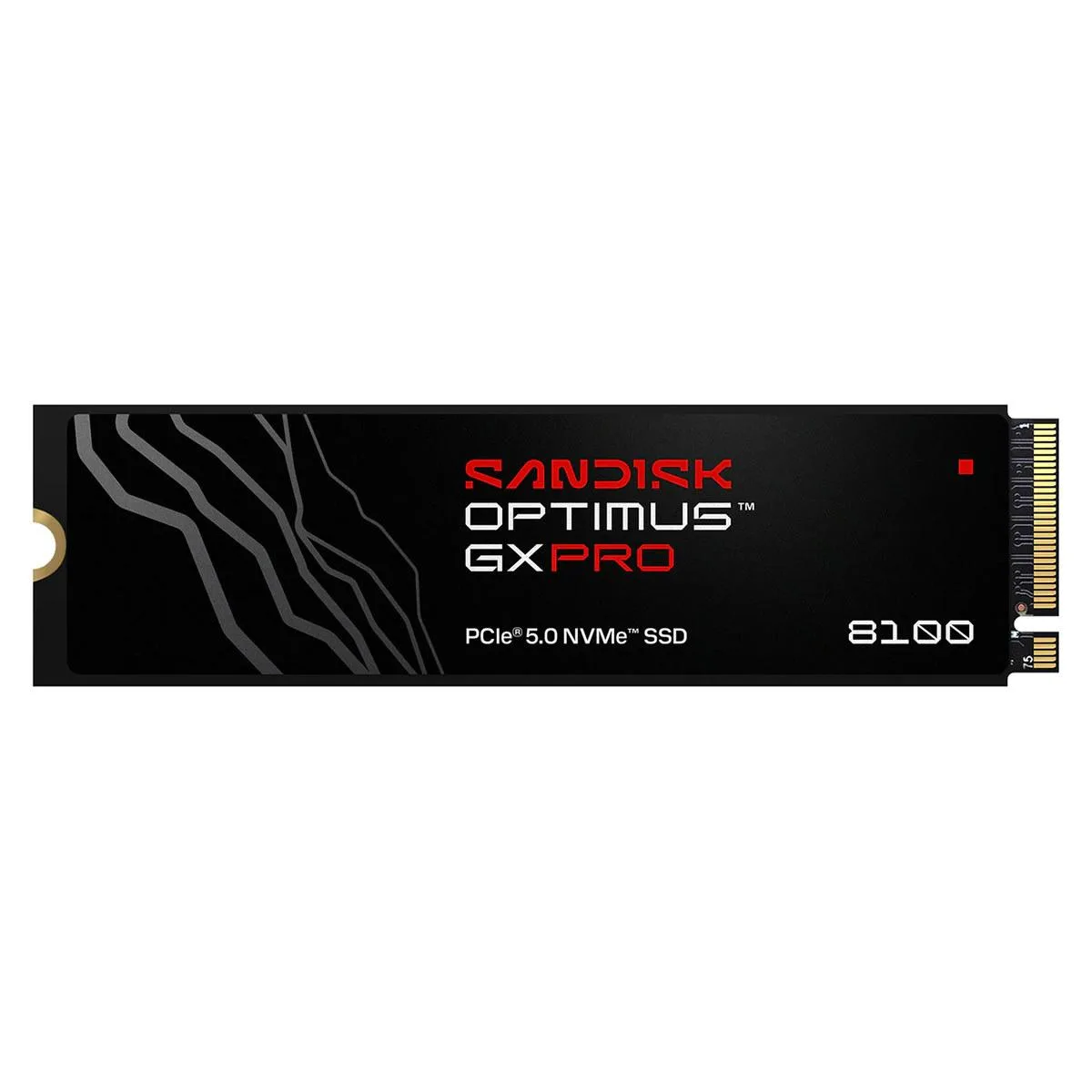
SanDisk SDSP82200TAH-000E0 Optimus GX PRO 8100 2TB internal SSD
- Internal Solid Stat…
- M.2 2280-S3-M
417,99 US$
0.00526987BTC
Em stockAceitamos criptomoeda — para que as moedas que detém possam comprar material informático real.Pague em cripto, gaste-a em material informático real. Envio seguro gratuito para todo o mundo acima de 399 $. Caixas neutras, sem marca, expedidas a partir da Alemanha.Envio seguro gratuito acima de 399 $. A sua taxa fica bloqueada durante 30 minutos assim que abre a finalização da compra.Taxa bloqueada 30 minutos. Cada artigo é selado, o seu número de série é verificado, e está coberto por uma garantia de 24 meses.Selado, garantido 24 meses.


SanDisk
M.2 2280 8 TB internal SSD with PCIe 5.0 x4 interface, sequential read up to 14900 MB/s, write up to 13200 MB/s, 4800 TBW endurance and integrated heatsink
Option 8TB w/ Heatsink
The SanDisk Optimus GX PRO 8100 is an 8TB internal solid state drive built for professionals who need high-capacity, high-speed storage. It uses a PCIe 5.0 x4 interface with NVMe protocol and 3D NAND TLC memory. A low-profile anodised aluminium heatsink with RGB LED is integrated for thermal management.
This drive suits content creators, AI developers and enthusiasts handling massive project libraries and write-intensive workloads. The 4800 TBW endurance rating supports heavy sustained writing. Users with older motherboards lacking PCIe 5.0 x4 slots or those needing only modest capacity for general office work should consider lower-specification alternatives.
Under continuous heavy workloads the integrated heatsink helps maintain performance during intense workflows. Average active power draw is 7.1W for reads and 7.3W for writes while idle consumption is 5 mW. The drive operates between 0°C and 85°C with an MTBF of 1,750,000 hours.
| Brand | SanDisk |
|---|---|
| Series | Optimus GX PRO 8100 |
| Model | SDSP82800TAH-000E0 |
| Device Type | Internal Solid State Drive (SSD) |
| Form Factor | M.2 2280-D5-M |
| Capacity | 8TB |
| Memory Components | 3D NAND TLC |
| Interface | PCI-Express 5.0 x4 |
| Protocol | NVMe 2.0 |
| Max Sequential Read | Up to 14900 MBps |
| Max Sequential Write | Up to 13200 MBps |
| 4KB Random Read | Up to 2,200,000 IOPS |
| 4KB Random Write | Up to 2,400,000 IOPS |
| Terabytes Written (TBW) | 4800TB |
| MTBF | 1,750,000 hours |
| HeatSink | with HeatSink |
| Power Consumption (Idle) | 5 mW |
| Power Consumption (Active) | Average Active Power Read: 7.1W Average Active Power Write: 7.3W |
| Operating Temperature | 0°C ~ +85°C |
| Storage Temperature | -40°C ~ +85°C |
| Max Shock Resistance | 1,500G @ 0.5 ms half-sine |
| Max Vibration Resistance | Operating Vibration: 5 gRMS, 10-2000 Hz, 3 axes Non-operating Vibration: 4.9 gRMS, 7-800 Hz, 3 axes |
| Height | 11.25mm |
| Width | 25mm |
| Depth | 80mm |
| Weight | 30.4g |
| Peso de envio | 0.05 kg |
| Dimensões da embalagem | 127 × 102 × 1 mm |
Outras versões deste modelo
Mesma família, memória, ventoinha ou frequência diferentes — compare antes de decidir.
Yes, the drive uses an M.2 2280-D5-M form factor and requires a PCIe 5.0 x4 NVMe 2.0 slot to reach its rated 14,900 MBps read and 13,200 MBps write speeds.
The anodized aluminum heatsink adds 11.25 mm of height above the PCB, so clearance depends on your specific motherboard layout and graphics card backplate thickness.
Run a 4 KB random read test at queue depth 32 using a tool such as CrystalDiskMark or FIO and compare the result to the 2,200,000 IOPS specification.
Também nesta secção
Mesma prateleira, mesma finalização da compra — oito moedas e uma taxa bloqueada durante 30 minutos.
O que paga, e a moeda em que vê os preços.
Enviado da sua carteira ao finalizar a compra
Apenas informativo — o catálogo está em dólares
Nenhuma moeda corresponde.
Escolha o idioma em que o site lhe fala.
Ainda não tem conta?
Já tem conta?
Não existe reposição automática: esta loja não envia qualquer e-mail, pelo que não há nenhum link de utilização única para pedir. Deixe o endereço na conta e ele será tratado manualmente.
Pedido registado
Não vai chegar nada à sua caixa de entrada — esta loja não envia qualquer e-mail. Alguém trata disto manualmente.
Recordou-se dela?