SanDisk
SanDisk Cruzer Blade 8 GB USB 2.0 USB flash drive Black SDCZ50-008G-B35
US$391.99
0.00501972BTC
現貨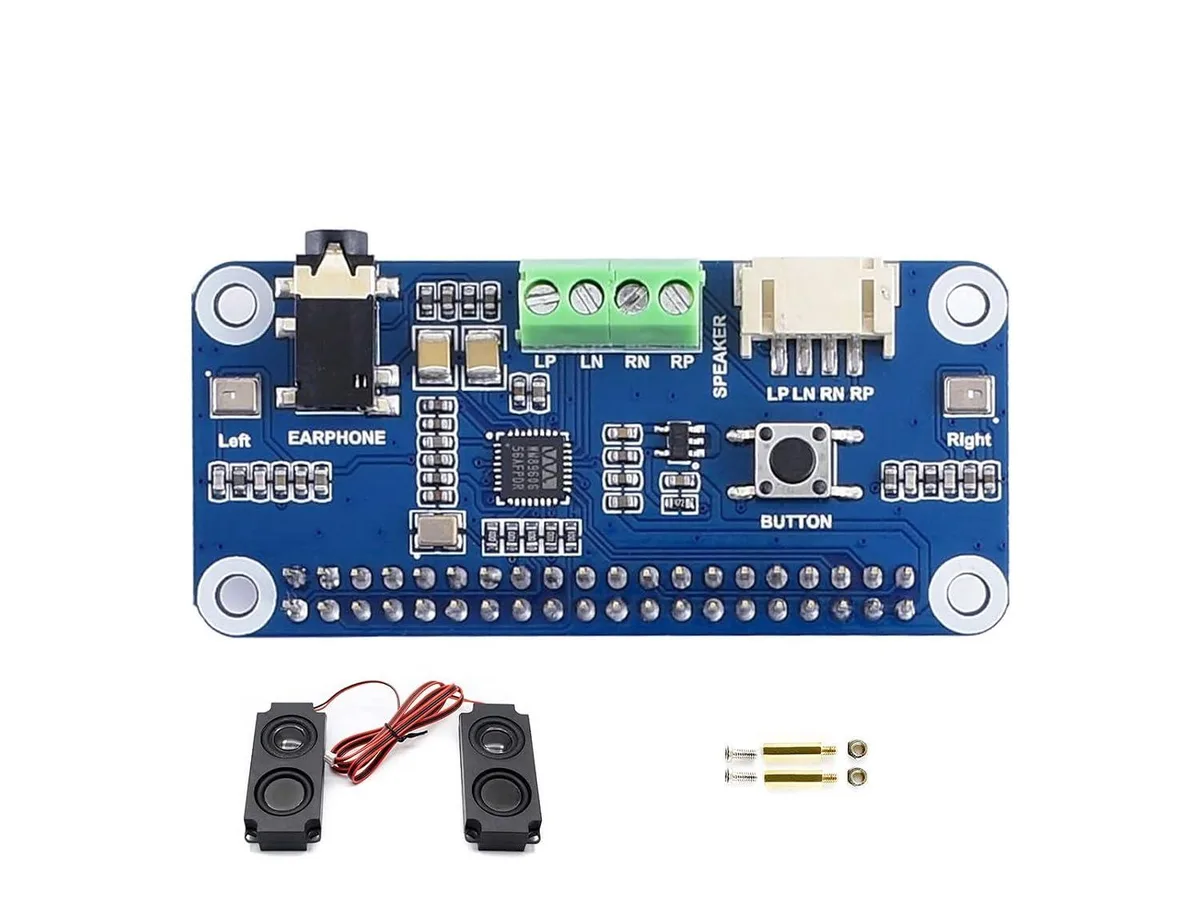


LORDWORLD
Adds stereo audio with dual MEMS microphones, a 3.5 mm headphone jack and speaker outputs to Raspberry Pi boards via the 40-pin header
The LORDWORLD WM8960 Audio HAT is a development board that adds high-fidelity audio input and output to Raspberry Pi single-board computers. It is intended for makers, students and engineers building voice-controlled devices, portable recorders or custom media players.
The board mounts directly onto the 40-pin GPIO header and exposes a 3.5 mm headphone jack plus a dual-channel speaker terminal block. Dual onboard MEMS microphones capture stereo audio while the WM8960 codec handles playback and recording through the I2S bus.
The low-power stereo codec draws minimal current from the Pi supply, so the host board’s existing cooling is sufficient. No active cooling or external power adapter is required and the module adds no audible noise during normal operation.
| Brand | LORDWORLD |
|---|
The WM8960 codec handles stereo playback and recording through the I2S link; the practical limits are those defined by the codec itself rather than the bus.
The board sits on the standard 40PIN GPIO extension header and adds a 3.5 mm earphone jack plus dual speaker terminals, so allow height for the jack and side space for speaker wires.
Many forget to enable the I2S overlay in config.txt before running the supplied Python scripts for play and record.
同類商品
同一分類,同一套結帳流程 — 支援八種加密貨幣,匯率鎖定 30 分鐘。
您支付所用的幣種,以及查看價格所用的貨幣。
結帳時由您的錢包發送
僅供顯示 — 商品目錄以美元計價
查無符合的貨幣。
請選擇網站使用的語言。
查無符合的語言。
初次造訪?
已經有帳戶了嗎?
本店沒有自動重設密碼的機制:由於不寄送電子郵件,也就沒有一次性連結可供申請。只要將地址留在帳戶中,之後將由專人處理。
請求已收到
不會有任何郵件寄到您的信箱 — 本商店完全不寄送電子郵件。會有人親自處理這些申請。
想起來了嗎?